

Unconscious Deconstruction
My Story, Part 2: The Shift to "By Me"

The bench was weathered cast iron, painted black, sitting on the side of a concrete path next to my new office overlooking a well-manicured ancient polo ground. The paint was flaking where the armrest met the frame. I remember picking at it. It had some weathered dedication plaque on it celebrating the life of someone long passed.
It was a hot, humid afternoon. He asked me to sit down, and with a heavy tone of resignation and a palpable dose of shame, sat down next to me, and told me who he had actually been the entire time I was alive. His childhood understanding of his sexuality. Cheating on my mom. Attending conversion therapy. Pretending he was a different person. Lying… to everyone.
I don’t remember what I said. I do remember the flaking paint under my thumbnail. I was present in body, and taking in the information, but my rational and emotional brain went into survival mode. I expected to feel… something…
…but nothing was there.
Cracks in the Foundation
Let’s talk about deconstruction. What actually… is it?
Most of us who have gone through this process fall into three camps, but generally it all starts from the same place: a triggering rupture that knocks a crack in your belief system.
You experience trauma, maybe, but sometimes its more simple. Encountering someone or something that starts to chip away at that foundational wall. A nasty breakup. A divorce. An unexpected death. The downfall of a leader. An unexplained disaster. Recognizing the level of poverty and evil in the world. Meeting someone so different, but so similar to your own humanity… that doesn’t believe.
From there, the three typical paths follow:
The Grief-Stages Model1. This is most common amongst the modern exvangelical community, characterized loosely by those world famous Kübler-Ross stages: Denial, Anger, Bargaining, Depression, and Acceptance.
The Therapy Model2. Similar, but with some tweaks. This includes doubt and questioning, intensifying our lens and research into the church, separation or rejection of theological principles, followed by a final acceptance or exit.
The Logical, or Rhetorical Model3. A much harder-edged approach, focused on rejection of the church, rejection of the word of god, and finally the rejection of god itself on mostly logical and scientific grounds.
Structurally, each of these is founded in either grief (endured pain we did not bring on ourselves) or analysis (subtractive, a destruction of what we were taught), and each is a to-me posture. Something is happening to me, or something is being removed without my consent. None of them supplies agency, or anything we could do about it. We just get to take it, and respond.
What happens next? Research psychologist Daryl Van Tongeren4 and his colleagues have identified three outcomes:
Building a modified Christian faith. Finding homes in the more progressive or emerging christian church movements. Walking back through the door, with a different perspective.
Religious modularity. Entering into and incorporating broader ‘spirituality,’ naturalism, and other historical faith traditions. Expanding the universe of faith.
Deidentification, or becoming a ‘Done.’ This includes the four D's: disbelief in core tenets, disengagement from emotional connection with the divine, discontinuance of religious rules, and disaffiliation from religious communities.
Me? With the sudden lack of firm foundation, the whole building imploded. I unconsciously became a Done.
Back to the Bench
Here is what I didn’t immediately understand, sitting on that bench: I thought a belief had broken.
A belief breaking is survivable. Beliefs break all the time. You lose one and the others hold you up while you find a replacement. That’s how a healthy structure is supposed to work.
But I didn’t have beliefs. I had an architecture. And in that architecture, every answer was critically load-bearing for every other answer. Remember the list?
Why do bad things happen? Answer.
What is my purpose? Answer.
Who am I? Answer.
What happens when I die? Answer.
Why do I feel this way? Answer.
Pull one brick and you don’t get a hole in a wall. You get the whole thing coming down on your head, because the answers were holding each other up.
Every single one of them ran through the same structural beam: my father, the church, my culture, and the God they gifted me as identity, are trustworthy. They are TRUE.
Unconscious Deconstruction
I want to be precise about the word unconscious, because people hear “deconstruction” and picture a guy with a journal and a reading list, thoughtfully dismantling his theology. Probably sporting a rockin’ man-bun.
That was not me. I did not initially consciously deconstruct anything. Deconstruction implies a deconstructor. I didn’t have that capacity. I was in unconscious survival mode.
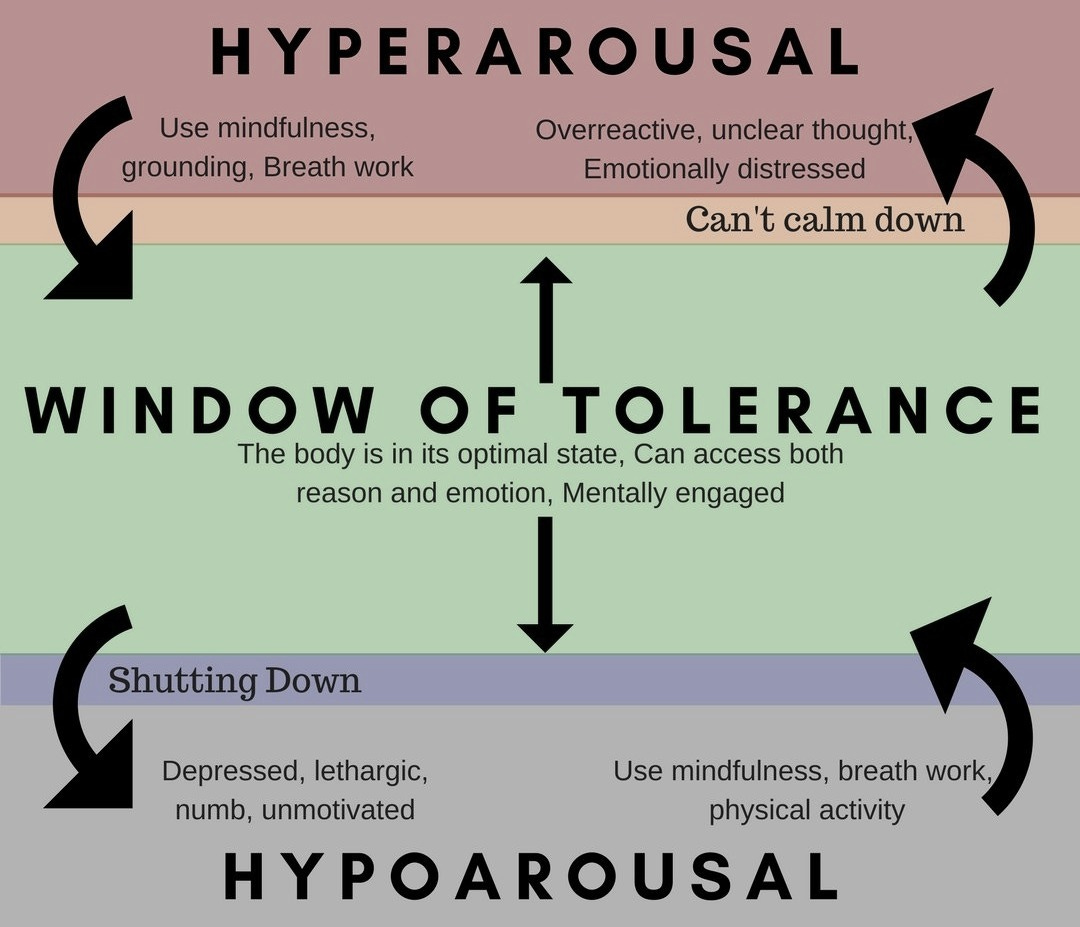
And in the cloud of dust, standing in the rubble, in what we in rehab would describe as existing outside of our window of tolerance5, I ran.
I spent the majority of the next decade being pretty much the opposite of that first quarter-of-my-life-Keith. I developed the mindset of total control. Absolute independence. Being told what to do didn’t work out so well… so let’s just reject all authority.
I moved across the country. I shared my past with noone, at least not the deep parts. Definitely not the painful parts. I shifted into “by me” mode, hard.
I’m in charge. I will make my own way. Family? eh. Old friends? who needs ‘em. Any level of support: community, emotional, spiritual, or financial? nah, I’m good. I’m a self-made MANNN.
The pendulum swung hard the other way. What was a culture of sobriety, humility, prudence, joy… became a life of tequila, silent judgement, strippers, and depression.
Down by the River
The turn wasn’t a revelation. Sure, it was fun. But I don’t want to skip over how unglamorous it was, because everyone’s story does the mountaintop thing here and I don’t have one.
Yes, I have a fun story about building my own self-sustaining tiny home in a school bus (with full solar, hot water, internet, everything the modern vanlifer would love to have!)… but the honest version?

I spent a few years stopping at WalMarts in small towns across the midwest and deep south buying booze for the week before I disappeared back into the woods in drunken self-isolation and insomnia.
I had action. I could do things… but no motivation. No more reason to exist. And it was awful.
Here’s what nobody tells you about agency: in that mode, it arrives as a bill, not a gift.
In the last part, I told you the certainty was the most secure I’ve ever felt in my life, and that it was not a burden, it was a gift. I meant it.
Somebody else answered all the questions and I got to spend my energy on execution and compliance. Do you understand what a subsidy that is? I got twenty-two years of free rent on the hardest questions a human being faces.
“By me” is where the rent comes due.
Why do bad things happen? You tell me. What’s your purpose? You tell me. Who are you? You tell me — and you no longer get to say “a sinner saved by grace,” so what’s left? What happens when you die? You tell me, and you have to actually mean it, at 3am, alone.
And the big summary question at the core: What’s... the point?
Not in a self-harm way, but in a deeply, terrifyingly existential “holy crap, if I’m really a human being… why am I here?” way.
That’s the part I didn’t expect. I’d been a straight-A student of a very demanding faith, and it turned out I had no idea how to answer a question. I’d only ever learned to recite one.
And there’s nobody to blame. That’s the real cost. In the old system, my failures were sin and my successes were grace, and either way I was off the hook. “By me” repossesses both. Every bad call is mine. Every good one is mine. It’s the loneliest accounting I’ve ever done.
But I was doing it. Me. Not being done to.
For a while, that felt like the end of the story. It wasn’t.
The Sun Also Rises.
Because that unconscious version of “by me” has its own trap, and I walked straight into it, at speed, with the same gusto.
If you white-knuckle authorship long enough, and if you are the sole author of your meaning, your morality, your worth, all of it… you eventually discover that the self is a small room.
You built the floor yourself, so you know exactly how thin it is. And the certainty you thought you’d escaped comes back in through the side door, wearing your own face this time, which makes it much harder to see.
I had traded a God who had all the answers for a self who had to have all the answers. Turns out that’s the same architecture. I just moved into the penthouse.
There’s a third state. It’s not “to me,” and it’s not that absentminded “by me.”
Up next: hitting the ceiling of self-authorship, what actually lives on the other side of it, and how conscious reconstruction differs from just building the same building again with better materials.
Come along, my friend. ‘Cause I can’t muscle my way through this next part alone… and that’s kinda the point.
Did any of this land for you? The unconscious part especially: the stretch where you kept doing the thing long after you had a reason to. I'd love to hear your story. ❤️
https://nakedpastor.com/blogs/news/the-5-stages-of-deconstruction
https://www.tatechangtherapy.com/blog/the-5-common-stages-of-faith-deconstruction
https://bcworldview.org/the-3-step-deconstruction-process-for-christians/
https://www.darylvantongeren.com/religion
https://www.richardbamfordtherapy.co.uk/blog/window-of-tolerance/